

Personalized Pain Therapy for Daily Life
Pain is rarely just a physical sensation; it is a companion that shadows your daily life, often influencing how you move, how you sleep, how you show up for work, family, or for yourself. When you walk into a therapy session at a clinic such as Thrive PT Clinic, it isn’t merely about “fixing what hurts” — it is about helping you reconnect to your life without the interruption of discomfort or limitation. In this article, aimed at you, the patient, we’ll explore what truly personalized pain therapy means, why it matters, how it shifts the everyday experience, and how Thrive PT Clinic makes that shift possible. I’ll guide you gently through the subtle but powerful transformation from surviving with pain to living with purpose.
Understanding Your Pain — and Its Place in Your Life
Pain is telling you something. It’s not just the sharp knee after climbing stairs or the dull ache in your lower back when you’ve been at your desk too long. It is a conversation between your body, your nervous system, your habits, and your emotions. At Thrive PT Clinic, this dialogue is taken seriously. They emphasise that for conditions like osteoarthritis of the knee, physical therapy isn’t just an optional extra — it can be a primary way of managing pain, reducing stiffness, and improving life quality.
Chronic pain, in particular, is more than just “a hurt that lasts.” It becomes embedded in your posture, your movement patterns, your thoughts and sometimes your identity. Thrive recognises that you’re not just a joint or a muscle — you are a person whose pain has a story. They say: “Pain isn’t just physical — it’s emotional, mental, and social.”
So the first step in the therapy process is reflection. What activities matter to you? What movements are you avoiding? What lifestyle habits (desk job, parenting, caregiving, athletics) color how your pain shows up? The therapist listens not only to “what hurts” but also “what matters.”
What Makes Therapy Personal — More Than Generic Exercises
One of the biggest frustrations patients often have is when they’re told the same “do 10 squats, stretch hamstrings” routine — regardless of their goals, job, age, or daily routine. Thrive PT Clinic sets a different tone. They emphasise “tailored treatment… just for you.”
Personalized therapy looks like this: at your first session you’ll undergo a detailed evaluation — not simply “where does it hurt,” but “how do you move, what makes you feel better or worse, how is your posture, how’s your daily rhythm.” Then your therapist crafts a program that weaves manual techniques (hands-on work), movement training, strengthening, posture awareness, and often education on how to integrate movement into your daily life.
For example, a patient with knee osteoarthritis may be given more than knee-strengthening. They’ll work on how you get up from a chair, how you negotiate stairs, how your hip and core support your knee, how you can avoid movement patterns that increase stress on the joint. Thrive describes this kind of therapy as “non-invasive, drug-free” and focused on restoring function.
The “personal” part also means your lifestyle and schedule are accounted for. Thrive PT Clinic offers flexible scheduling, and convenience is a factor: you’re not expected to change your life to fit therapy — therapy fits your life.
The Art of Pain Therapy in Daily Life
Let’s imagine you: morning routine, commute, desk work, maybe errands, perhaps children or caregiving, maybe evenings you like to walk, garden, meet friends. Your pain sneaks in during one of these tasks. What does therapy do to change your experience?
- Movement becomes your ally. Rather than avoiding movement for fear it will hurt, you learn to move with intention. Thrive emphasises that movement is “medicine” — when you stay still too long because of pain, you may lose muscle strength, your joints stiffen, your nervous system stays on alert.
- Posture, habits and hidden stresses get addressed. Maybe you lean on one leg, cross your legs, slump in your chair — patterns that subtly shift load and create pain. Therapists at Thrive will help you become aware of those patterns, teach you how to subtly adjust throughout the day, and give you “micro-break” strategies so you don’t wait until the end of the day to feel the toll.
- Hands-on work and targeted technique. When manual therapy comes into play — joint mobilisations, muscle release, myofascial work — it isn’t simply a “massage and go.” It is targeted at places that are restricting movement or creating aberrant load. For instance, in back and nerve-pain programs, Thrive uses techniques to calm the nervous system, release tight fascia, and restore more efficient movement patterns.
- Goal-setting that matters to you. Maybe your goal is to walk your dog without hip pain. Maybe you want to lift groceries without grimacing. Maybe you want to play with your kids without worrying the shoulder will flare. A good therapy plan at Thrive will tie into your personal “why.” It’s not about arbitrary reps — it’s about meaningful movement. Providing that context shifts therapy from a chore to something you’re invested in.
- Education and self-management. Once you leave the clinic, your life continues. Thrive emphasises that understanding what you’re doing and why is vital. Consider their commentary on arthritis: medication may relieve symptoms temporarily, but therapy is about patching the leak in the boat instead of bailing water.
Everyday Habits That Support Long-Term Relief
As a patient, you’ll likely hear your therapist at Thrive mention a few lifestyle habits that, though simple, have big cumulative impact:
- Incorporating gentle movement throughout the day. Set a timer if you work at a desk; stand, stretch, shift your weight, walk a short lap.
- Being mindful of your body’s “load” — avoid repeatedly loading one side only (carrying bag on one shoulder continuously, stepping into car always the same way without neutral adjustments).
- Aligning your pants and footwear: if your shoes are worn unevenly or you favour one side, subtle misalignment can creep into your hips, knees, lower back.
- Integrating strengthening and mobility training prescribed by your therapist into your home life. Thrive PT Clinic suggests these aren’t optional — they’re your tools to stay ahead of pain rather than chase relief.
- Cultivating patience. Especially for chronic pain, realistic timelines matter. Thrive notes that recovery from chronic pain “depends”—it isn’t one-size-fits-all.
When these habits become part of your rhythm, therapy stops being an appointment you attend and becomes a trajectory you live.
From Pain to Performance — The Thrive Approach
When we talk about performance, we aren’t just talking about athletes. We are talking about your performance in your own life — whether that’s walking comfortably, lifting your grandchild, bending down to garden, ascending stairs without holding the rail. Thrive PT Clinic frames its care in these terms: pain therapy, sports injury therapy, pelvic floor therapy, osteoarthritis therapy — all oriented around helping you move, restore strength, and live in motion.
Often what happens is that once pain decreases, patients shift into “how do I stay strong, how do I avoid a relapse?” Thrive’s programs accommodate that by not only treating your symptom but by building resilience. That means more than just “stop hurting”; it means “thrive in your body.” When you emerge from therapy with stronger posture, better movement habits, and a therapist-trusted plan for self-management, you’ve moved from function to freedom.
The Therapist–You Team
When you step into Thrive PT Clinic, you’re not just meeting a practitioner; you’re entering into a therapeutic partnership. The clinic emphasises communication as a foundation. On their website you’ll read that they value “clear guidance, timely updates, easy access by phone, email or text.”
What that means for you: your feedback matters. If something hurts more on a given day, you tell them. If a certain stretch doesn’t feel right, you bring it up. The therapist adapts. That flexibility reinforces one of the fundamentals of personalized care: what works today might need tweaking tomorrow. And you are listened to. Some patient testimonials on Thrive’s site highlight this: for example, one patient with “years in severe pain” said that the therapist “took the time to carefully evaluate… created a personalized treatment plan… I noticed real progress within just a few sessions.”
You’ll find that the time you spend in each session matters. Instead of being rushed through standard exercises, you’ll probably encounter focused one-on-one time, assessment of your movement, and discussion of your daily life context. That sets you up not only to heal but to sustain.
Living After Therapy — Sustaining Your Gains
Many patients worry: after therapy ends, will I regress? With a personalized approach this risk goes down. Here’s how Thrive helps you safeguard your progress.
Firstly, you leave with a clear home-program — tailored exercises you can integrate into your real life. They are realistic for you (time-wise, equipment-wise) and designed with your lifestyle in mind. Secondly, you receive education on how to monitor your body: recognise early signals of strain, know when to scale back, know when to modify technique. Thirdly, the clinic emphasises prevention — you build strength, mobility, and movement literacy so you’re less vulnerable to flare-ups. For example, in managing knee osteoarthritis, strengthening muscles around the knee and correcting movement patterns becomes a long-term investment.
So when you’re five, ten, fifteen years down the road, you’re not just hoping pain stays away — you’re living with tools, awareness, and a body better supported. Therapy becomes a launchpad, not a stopgap.
Your First Visit — What to Expect
If you’ve never been to a clinic like Thrive PT, here’s a simple narrative of what your first visit might feel like:
You walk into the clinic and are greeted, your concerns are listened to — “Tell me your story,” your therapist might say. You describe your pain, your daily life, your goals: “I want to garden again,” “I’m fed up with waking up stiff,” “I’m done with my shoulder holding me back.” Then there’s a functional movement assessment — you might walk, squat, reach overhead, sit-stand. The therapist observes patterns: how you distribute weight, how your spine aligns, how your limbs move. You’ll hear “I notice when you do this, your hip shifts,” or “Your shoulder blade doesn’t engage when you raise your arm.”
Then a plan is laid out: “Here’s what we’ll aim for: reduce pain within the first few sessions, restore your movement pattern for X, and build strength by Y. Between sessions I’d like you to do A, B, and C.” There may be a manual therapy component that day — hands-on soft-tissue or joint mobilization — plus a few guided movements. Before you leave, your therapist gives you homework — short routines, sometimes micro-habits, sometimes just movement cues to integrate during your daily tasks.
You leave feeling heard, with a sense of direction and a sense that someone has your back (literally and figuratively).
How Daily Life Shifts With Personalized Pain Therapy
Let’s zoom out and imagine how your day might gradually shift. In the morning you get up and instead of wincing when you stand, you notice you stand upright smoothly. At your desk you don’t feel the creeping stiffness around hour two — you’ve made subtle corrections. You carry a grocery bag with neither shoulder clenching nor knee wobble because you learned how to engage your core and hip to share load. You climb stairs without feeling like you’re “limping into the evening”. You play with your child or grandchild and realise: the pain hasn’t hijacked the moment. In the evening you wake up without that familiar ache which usually signalled tomorrow’s slower start.
These changes don’t happen overnight, and they are rarely dramatic overnight. But they are consistent. And because the therapy you’re receiving is personalized — tuned to your body, your movements, your life — the changes are meaningful, not cosmetic. They are built into how you move when no one is watching, how you behave in your daily habits, and how you carry yourself.

Why Choose Thrive PT Clinic for This Journey
What sets Thrive apart is their commitment to personalized, patient-first care. On their website they highlight services ranging from hip pain therapy to chronic pain therapy, back pain, foot and ankle therapy — each with a direct line to your unique needs.
They also emphasise accessibility: convenient location in Hillsborough Township, flexible scheduling, communication that prioritizes your comfort and questions.
Moreover, they emphasise not merely treating symptoms but restoring freedom of movement and quality of life. That means when you pick Thrive, you’re signing up for more than just an appointment — you’re signing up for a relationship, a strategy, a journey.
Patient Story (A Composite)
Imagine Patricia. She’s 52, works at a desk most of the day, loves gardening on weekends, and recently has been feeling a nagging ache in her right knee and a stiffness in the morning in her lower back. She’s tried ice, over-the-counter meds, stretching after work — yet she wakes up tight, struggles climbing stairs at home, and avoids getting down on the ground to plant flowers because rising up hurts.
Patricia begins therapy at Thrive PT Clinic. At her first session the therapist not only examines her knee and back, but asks about her day: how long she sits, how she stands from a chair, how she walks, how she ascends stairs to her home. The therapist notices that Patricia tends to lean to one side when she moves from sitting to standing, placing more load on her right knee. Her hip muscles have weakened a bit because gardening turned into mostly watering rather than digging.
Together, they establish goals: reduce knee pain so Patricia can kneel and plant again; improve her back mobility so morning stiffness disappears; build strength so she doesn’t limp into Saturday gardening. Over the next weeks, Patricia receives targeted manual therapy to her knee and hip, mobility work for her back, movement coaching at her desk, and a home program with short routines that fit her evening schedule. She learns micro-breaks for sitting, a slightly modified way to stand up from a chair that protects her knee, and a simple hip-strengthening drill she can do 3× a week.
Gradually, something shifts. The vague ache becomes manageable. Stairs no longer feel like a barrier. She kneels down in her garden and doesn’t hold her breath before standing up. The stiffness in the morning reduces significantly. She realises she’s not just “coping” — she’s moving like the person she recognizes. And the best part: the therapy isn’t done yet — she has a plan for maintenance, and she’s empowered with awareness so she can catch flare-ups early.
Suggested Reading: Overcoming Chronic Pain with Expert Care
Conclusion
Personalized pain therapy isn’t a luxury. It is a smart, human-centered way of addressing pain in your daily life. It recognizes that pain lives inside your routines, your posture, your habits, your job, your movement. It accepts that you are not a generic body but a unique person. In choosing a clinic like Thrive PT Clinic, you’re choosing a partner in your movement, your function, your quality of life.
If you have been living with pain, allowing it to define how you move, how you feel, what you do — then consider that there is a different way. A way that starts with you, listens to your story, integrates your daily reality, and builds a plan for you to move more freely, more confidently, and more fully. At Thrive PT Clinic, you’ll find that approach.
If you’re ready to reconnect with your body’s potential and reshape how pain fits into your daily life, reach out to Thrive PT Clinic and begin the journey to “thrive.”
Related Posts

How Physical Therapy Helps Restore Confidence After Years of Pain
Pain has a way of changing much more than the body. At first, it might begin...

What to Expect from Back Pain Therapy: Methods and Techniques
Back pain is a pervasive issue affecting millions of people worldwide, impacting...

Movement Patterns That Make Elbow Pain Worse (and What to Fix)
Elbow pain can feel deceptively simple on the surface. You might wake up one...
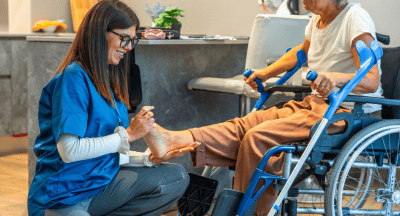
Effective rehabilitation strategies for foot and ankle
Here is an article exploring effective rehabilitation strategies for foot and...